Professionals spend significant time turning research into presentations, but struggle to structure insights into stories that land. Existing AI tools generate generic decks or unreliable synthesis, making outputs hard to trust and share. How might we help UX teams turn messy research into clear, shareable insights through an AI-powered web app?
PROBLEM
RESEARCH SUMMARY
Timeline
3 months
Team
Maisie Krittayaruangkit
Aadil Khan
Shreya Shah
Tools
Figma Design
Figma Make
Lovable
Cursor
My Role
User Research
Visual Branding
Prototyping
JUMP TO SOLUTION!
Schema
Synthesizing messy research into quick, presentable insights
In Fall 2025, I joined ADUX Labs, a UX learning and research organization, to help them create an AI-powered storytelling tool. My challenge was to build off the existing MVP to design a new user flow that asks the right questions, delivers real-time feedback, and combats against AI hallucination.
AI is great…but it still hallucinates
AI can be great, but it still hallucinates. It makes things up. And that’s risky when you’re dealing with real research data or trying to make decisions. The takeaway: current LLMs still hallucinate in ways that make research synthesis risky for decision-making.
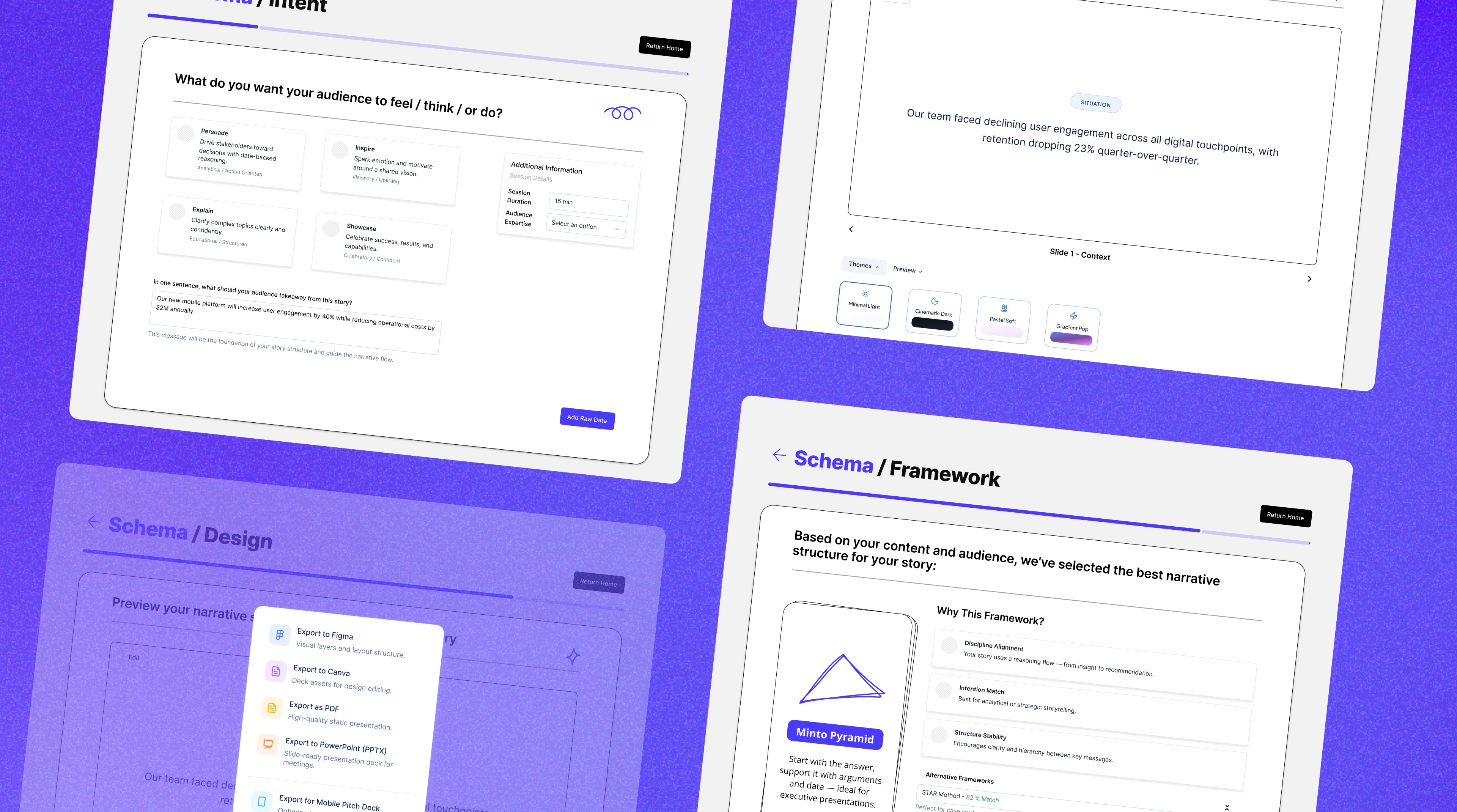
Created Schema, an AI-guided storytelling platform that helps teams turn complex knowledge into structured narratives and presentation-ready decks using proven storytelling frameworks.
SOLUTION PREVIEW
CURRENT SOLUTION
Schema: a representation of a plan or theory in the form of an outline
Context
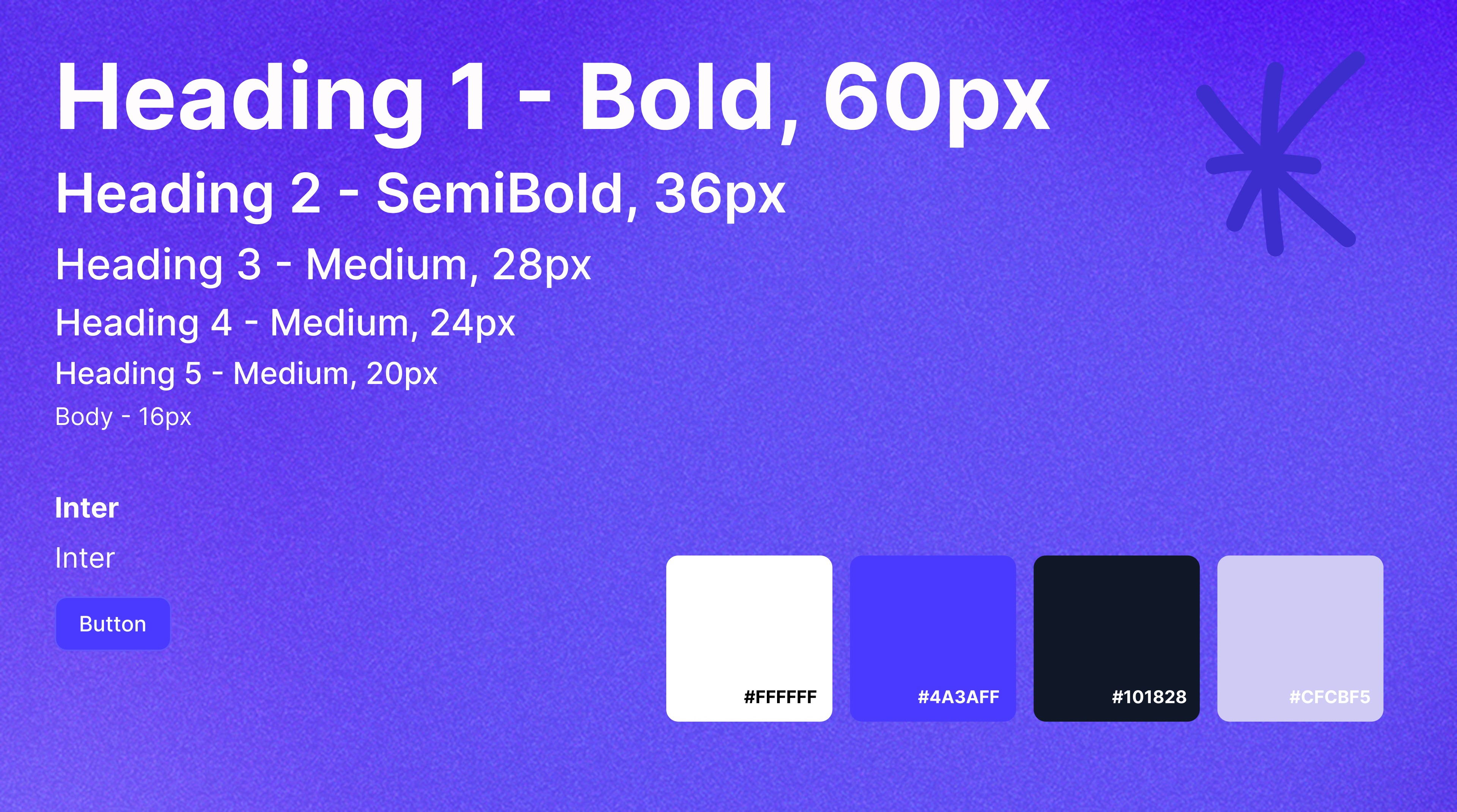
Style Guide

Next steps for ADUX Labs +
What I learned
Looking ahead with Schema
The next phase of Schema is about learning through use. Testing with real users will help validate whether the frameworks, flows, and visual language support how people actually tell stories. As the product evolves, there's room to refine the design system, and explore more frameworks.
The new age of design: facilitating between tools
Working with AI reinforced that it's most valuable as a collaborator. When paired with the right intent, it enabled faster exploration and helped surface early ideas without replacing design judgement. My role shifted toward using AI to accelerate thinking, not replace it.


© 2025 - Ibrahim Rasheed

Presentation work is a huge time sink. Studies show professionals spend
significant time each month/week preparing decks. EmpowerSuite
Storytelling is linked with better persuasion and retention and frameworks make complex ideas clearer and memorable. ScienceDirect, ThinkCell, Untools
First MVP
Early findings and prototype
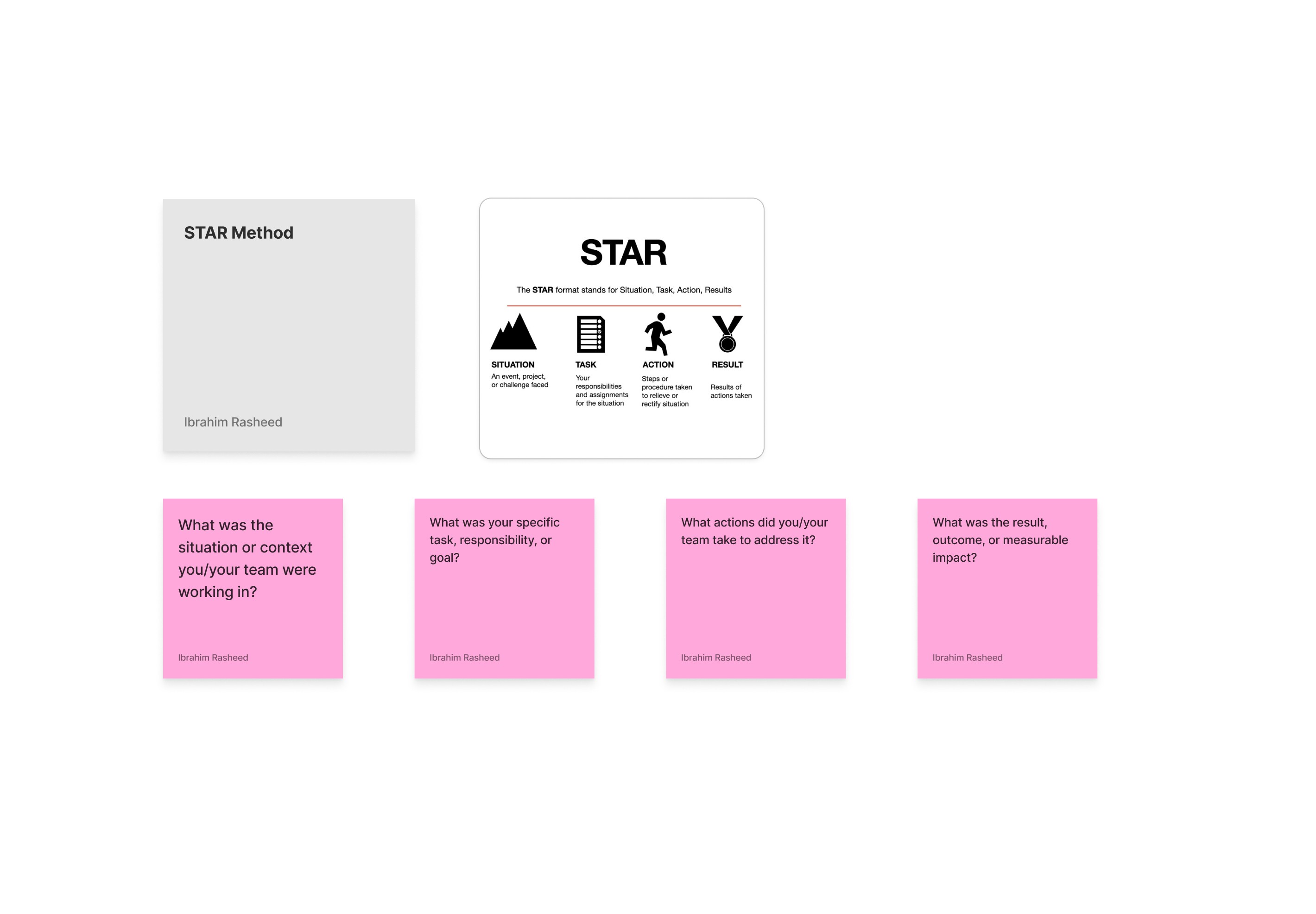
Exploring Storytelling Frameworks
Storytelling Frameworks structured our User Intake
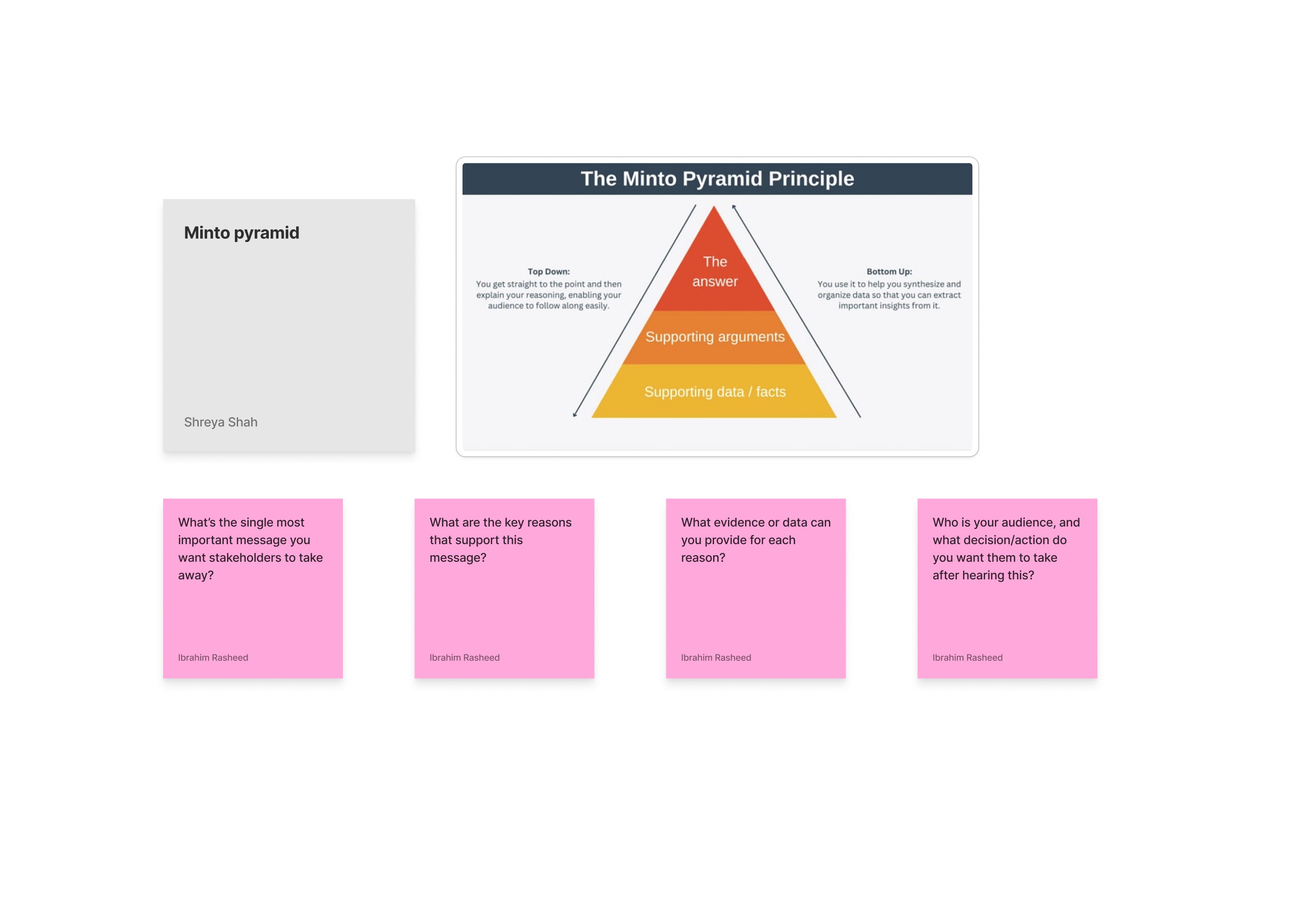
We grounded the system in structured storytelling frameworks instead of open-ended prompts to combat hallucination. These frameworks create a defined narrative space where AI can generate content guided by the user’s audience, goal, and context.
They helped us with asking the right questions from the user to inform better decisions for the system to operate; narrowed it down to important pages.
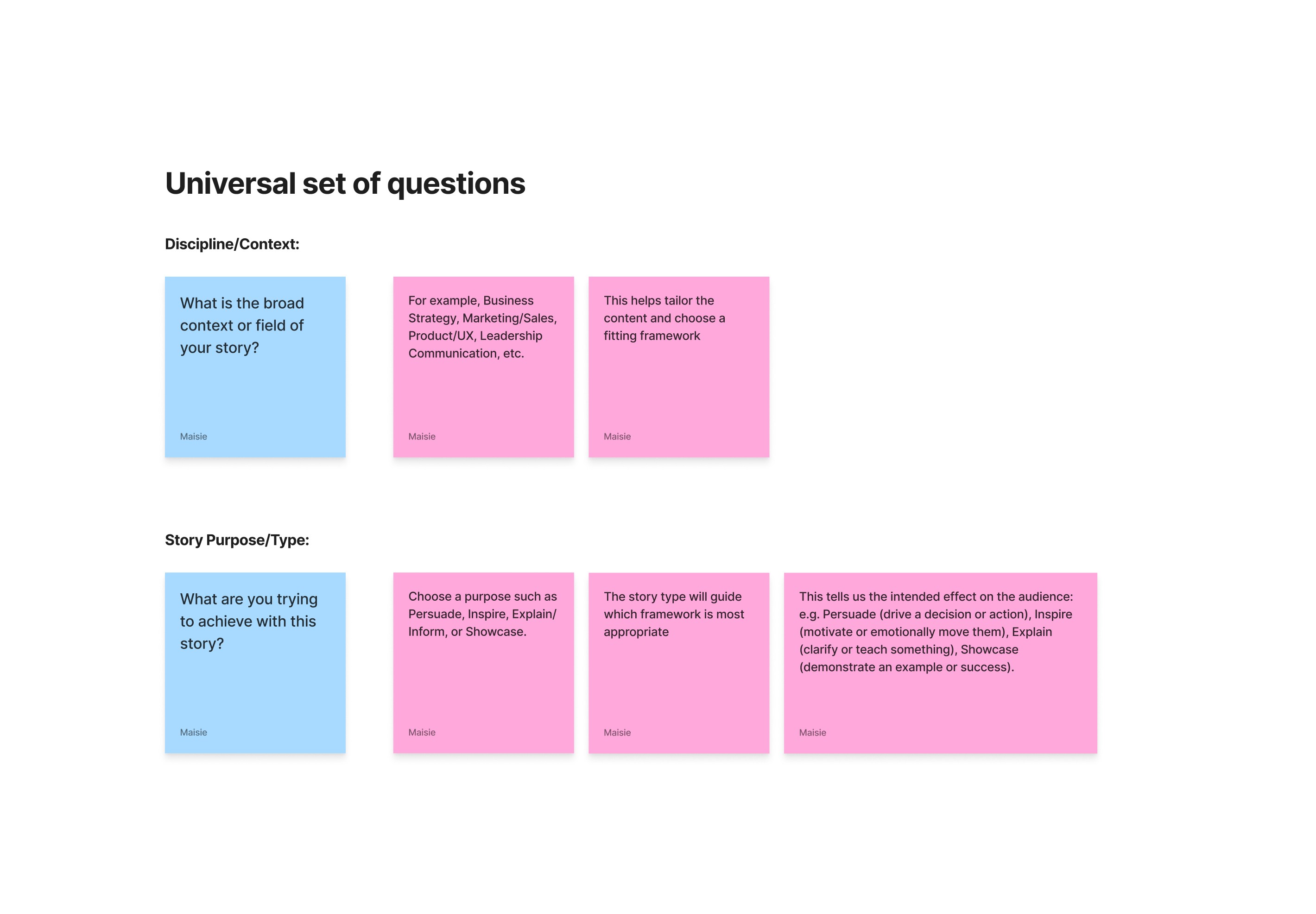
Discipline
Story Purpose
Audience
Goal/Message
Problem/Challenge
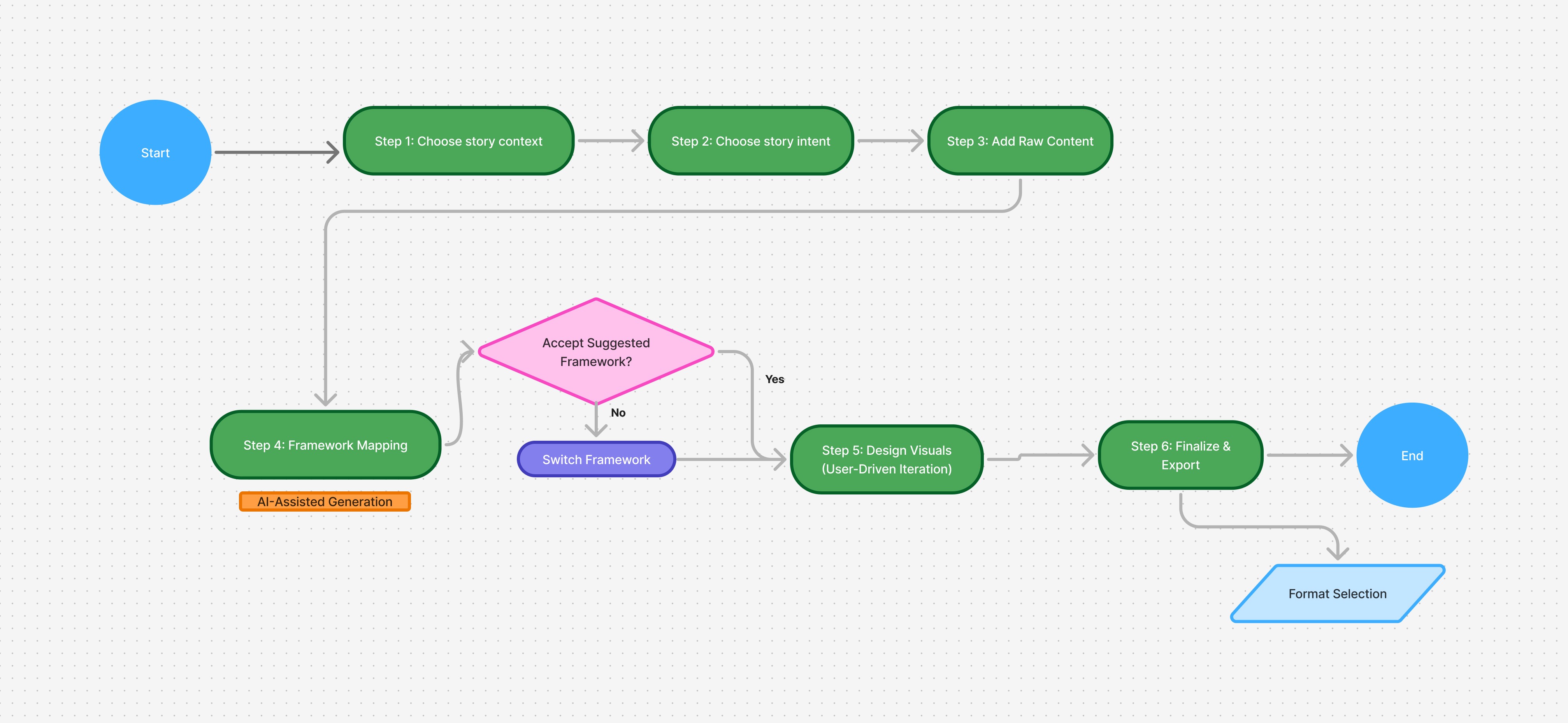
Storytelling user flow
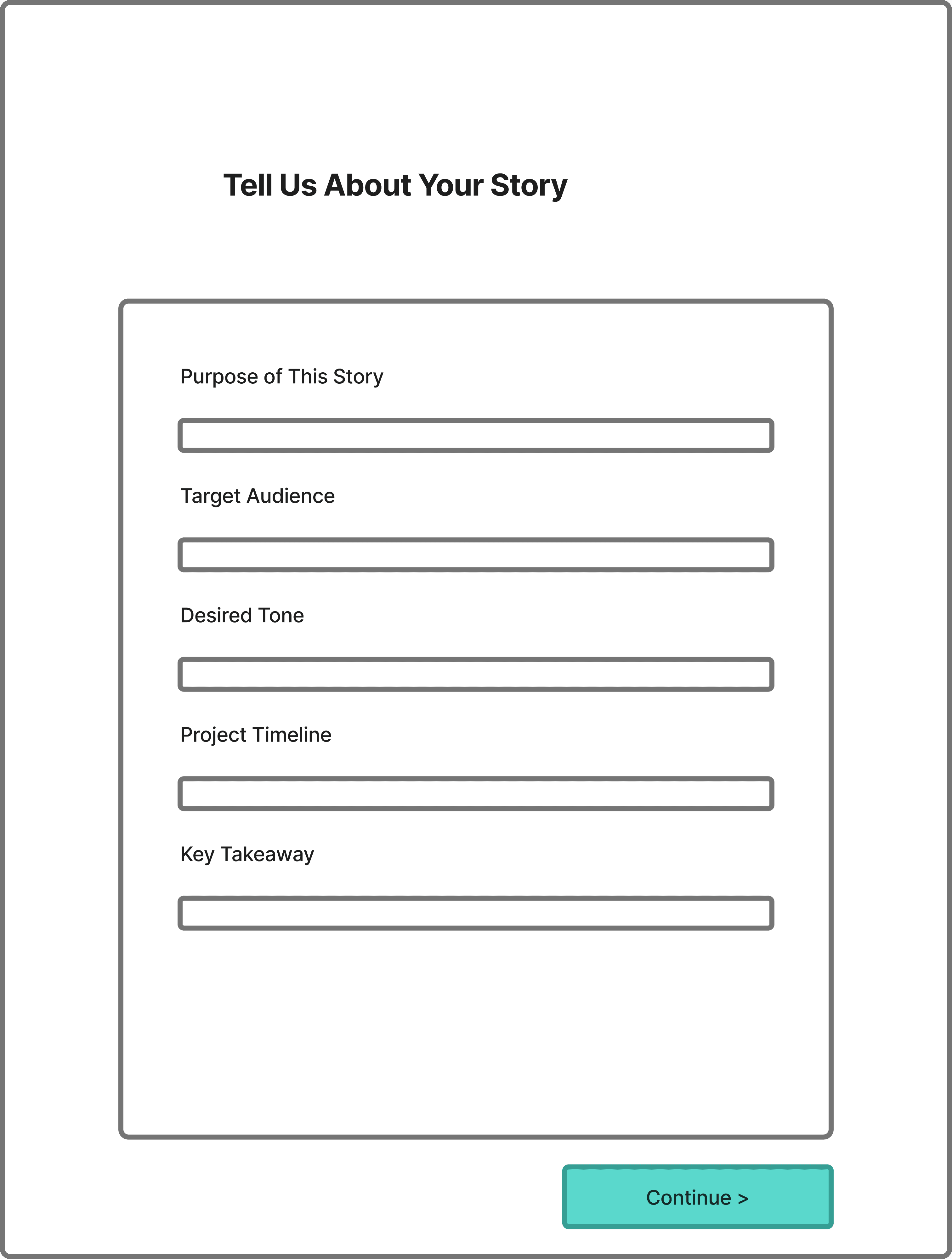
Low fidelity wireframes
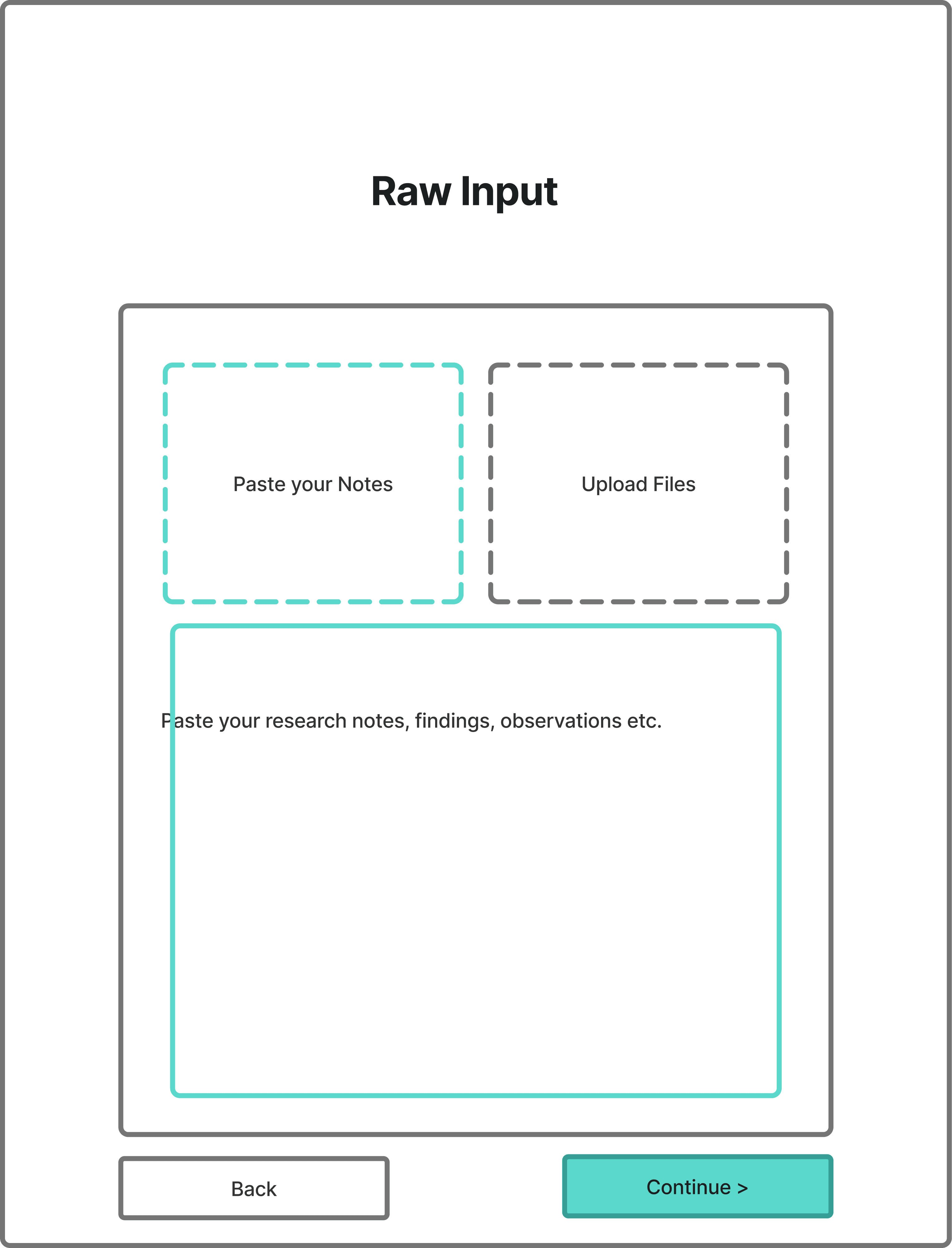
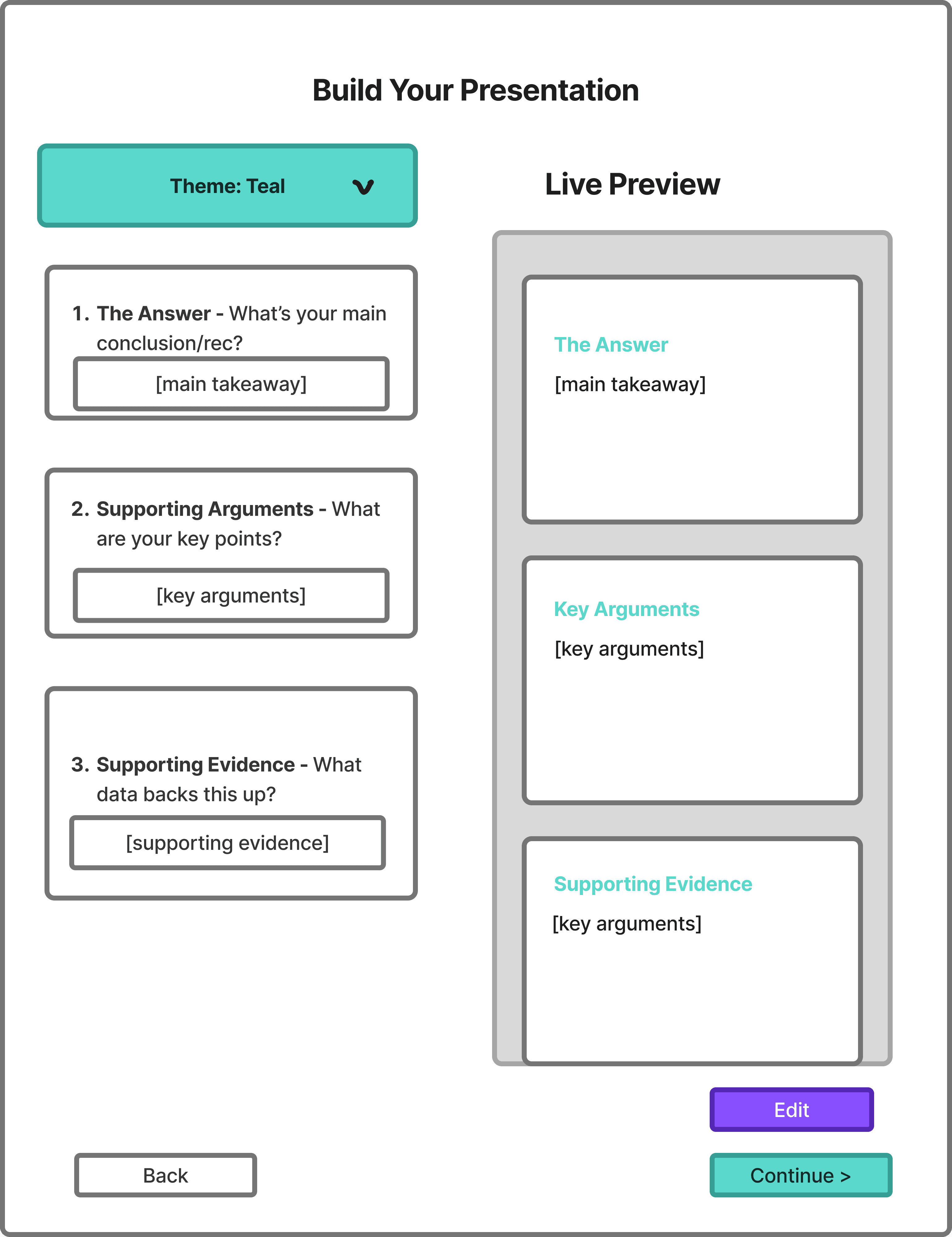
Building out our pages in low fidelity provided my team with direction, allowing us to quickly validate a sequence before committing to visual design or AI logic.
In turn, I shifted the pages into different touchpoints, ultimately generating a user flow for us to refer to, ensuring each step collected only the information needed to guide the narrative.
Using AI tools to speed up the process…
Being transparent about the usage of AI and how it can benefit teams
This project was the first of its kind for me in that I got to use AI in a real design setting. At ADUX Labs, using Lovable and Figma Make was part of our exploration and experimentation process. My role became one of a facilitator, bridging product intent and design execution.
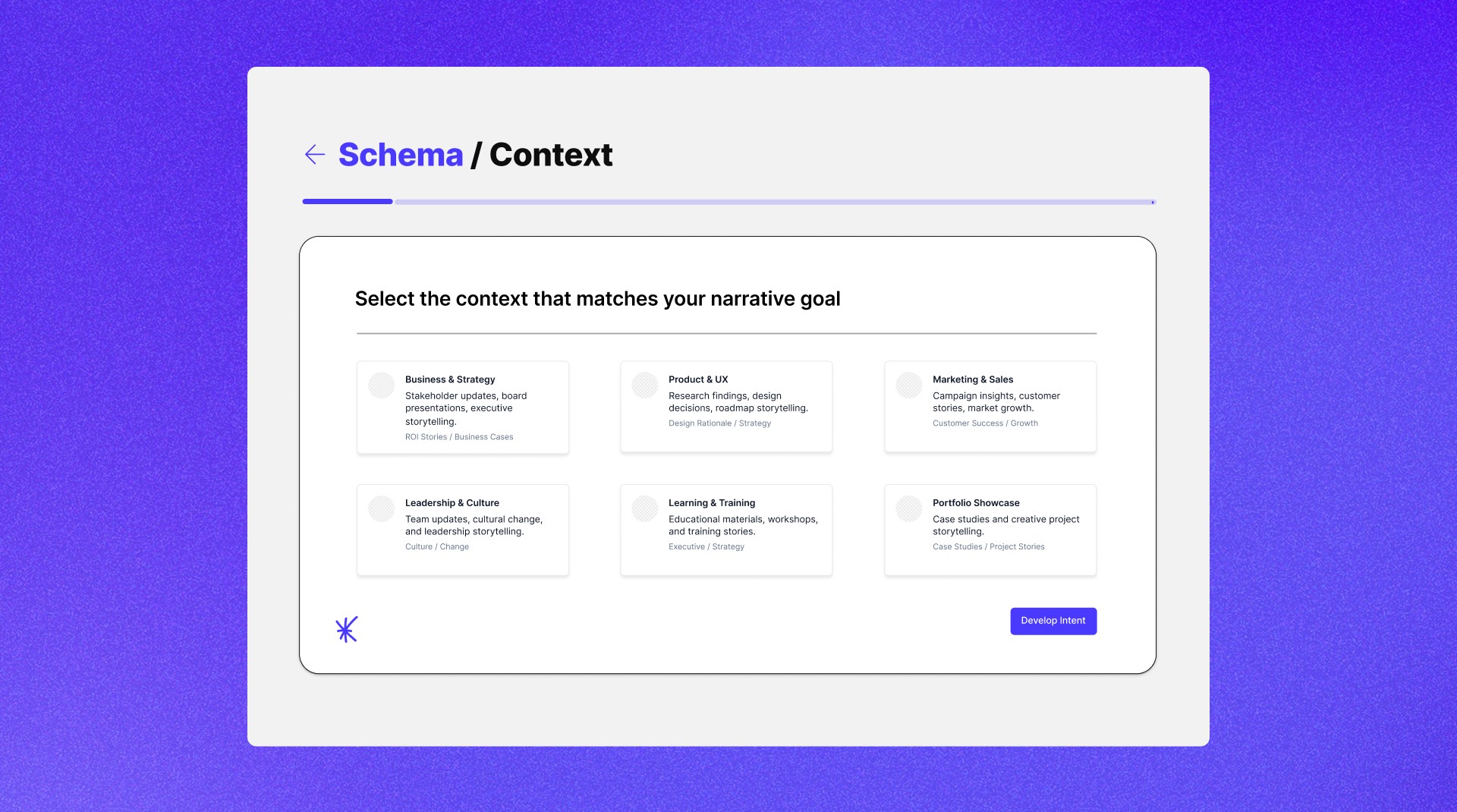
01
User selects what type of story they're creating.
Users begin by selecting the context that best fits their narrative goal, giving them control over how their story is framed. Whether they're working on a business case, design work, or research, this choice influences AI logic and structure to craft a compatible end-product.
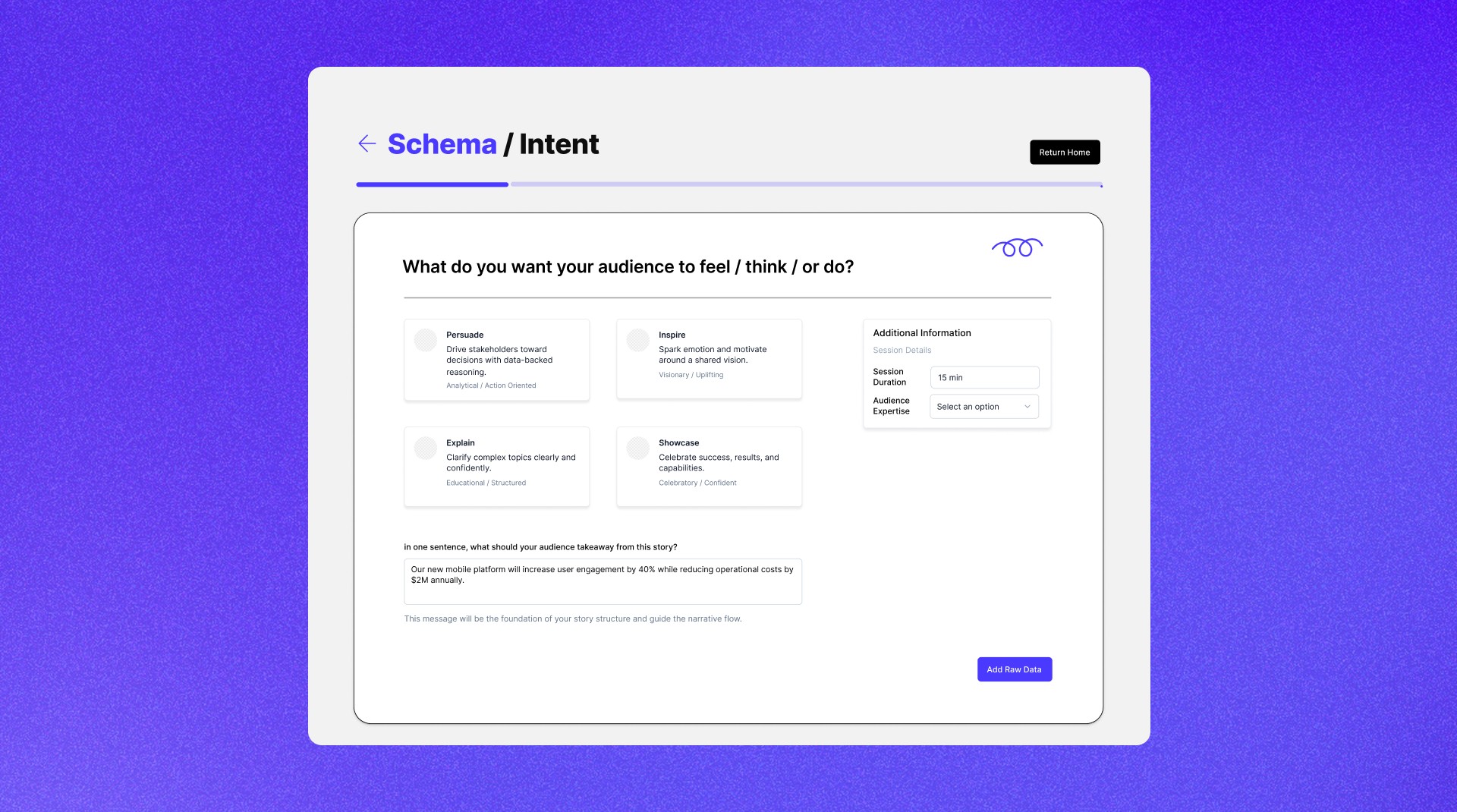
Intent
02
Defines the goal or emotional tone, with options to select duration and audience expertise.
This step helps users clarify what they want their audience to feel, think, or do. By choosing an intent, like persuade, or inspire, users shape the tone and depth of the story.
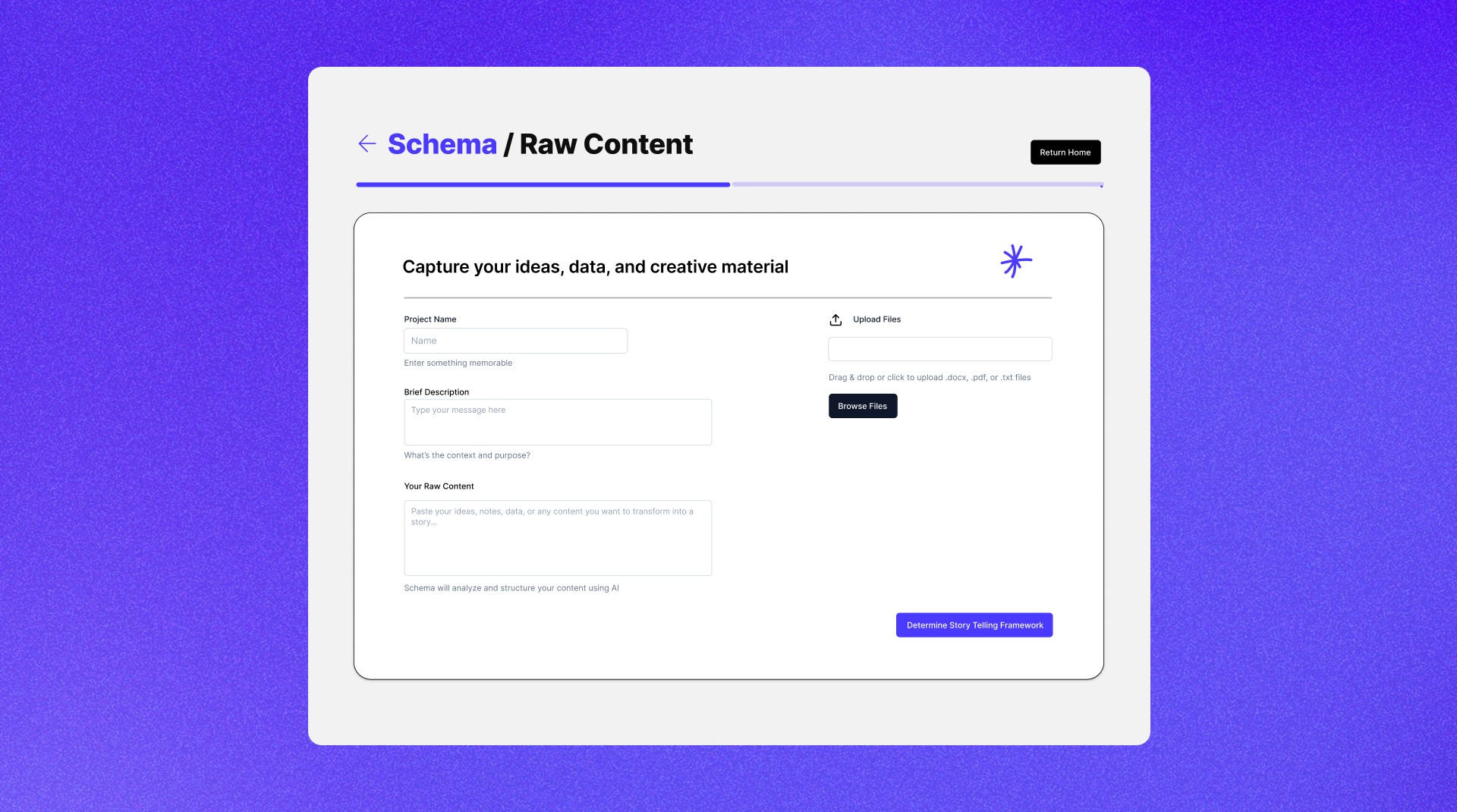
Raw Content
03
Users upload or input their unstructured story content.
This stage allows users to input raw content without needing to worry about structure. By capturing ideas as-is, the system can analyze them into a coherent narrative. It reduces friction at the start of the storytelling process.
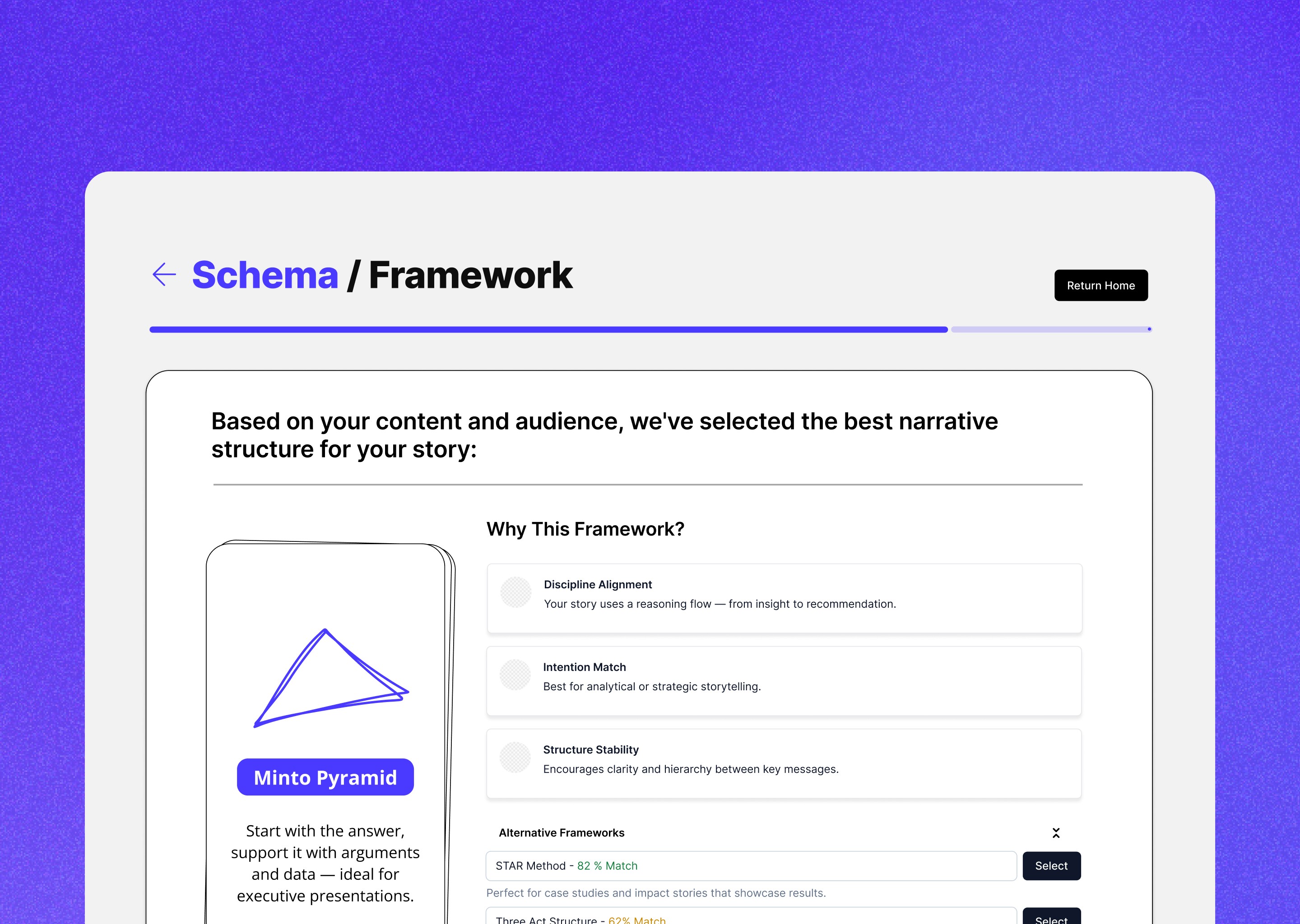
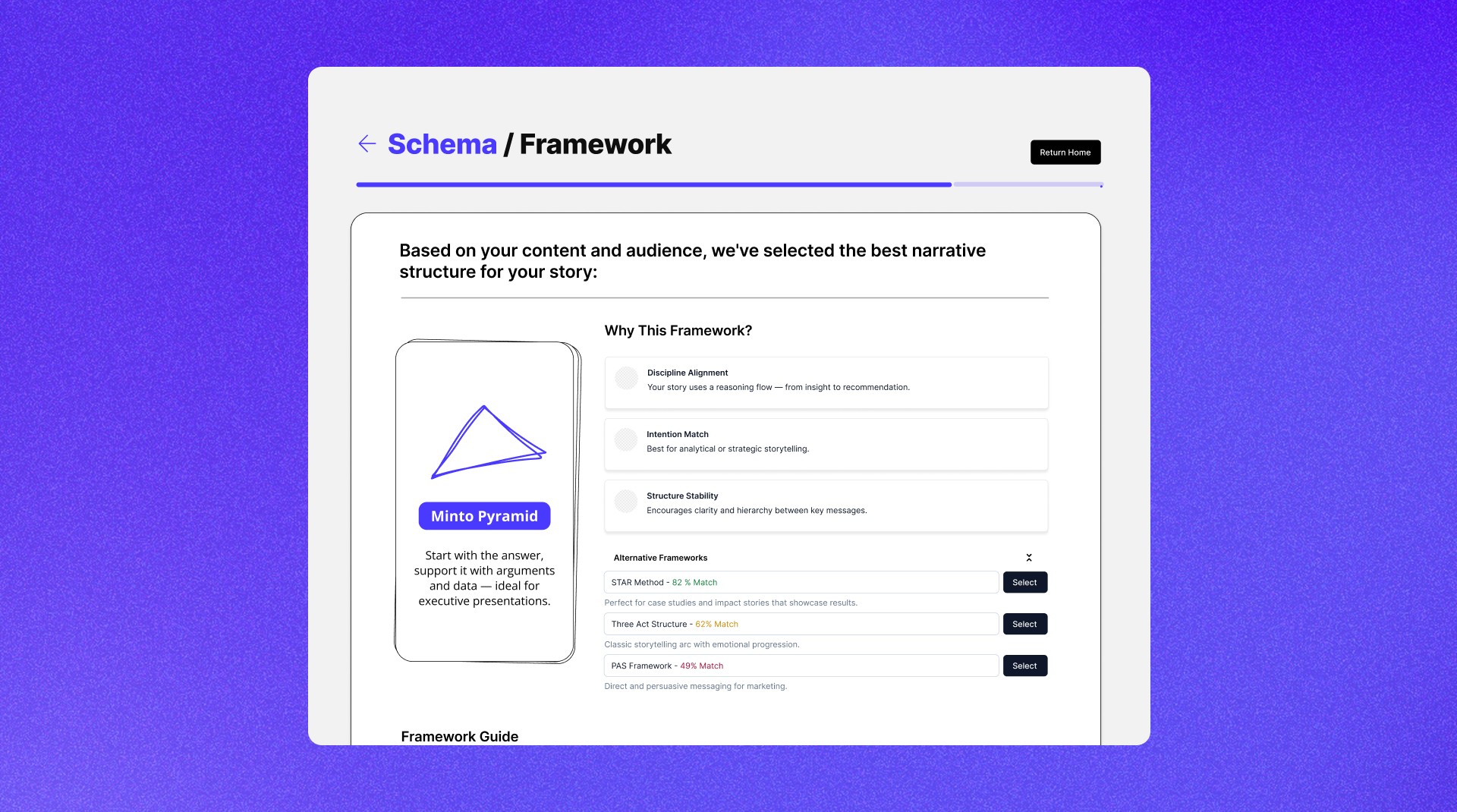
Framework Mapping
04
System matches user with an ideal storytelling model
The system identifies narrative patterns within the content and matches them to an ideal storytelling framework.
if content includes problem → solution → result,
sugggest minto pyramid
if content includes journey, emotion, change,
sugggest hero’s journey
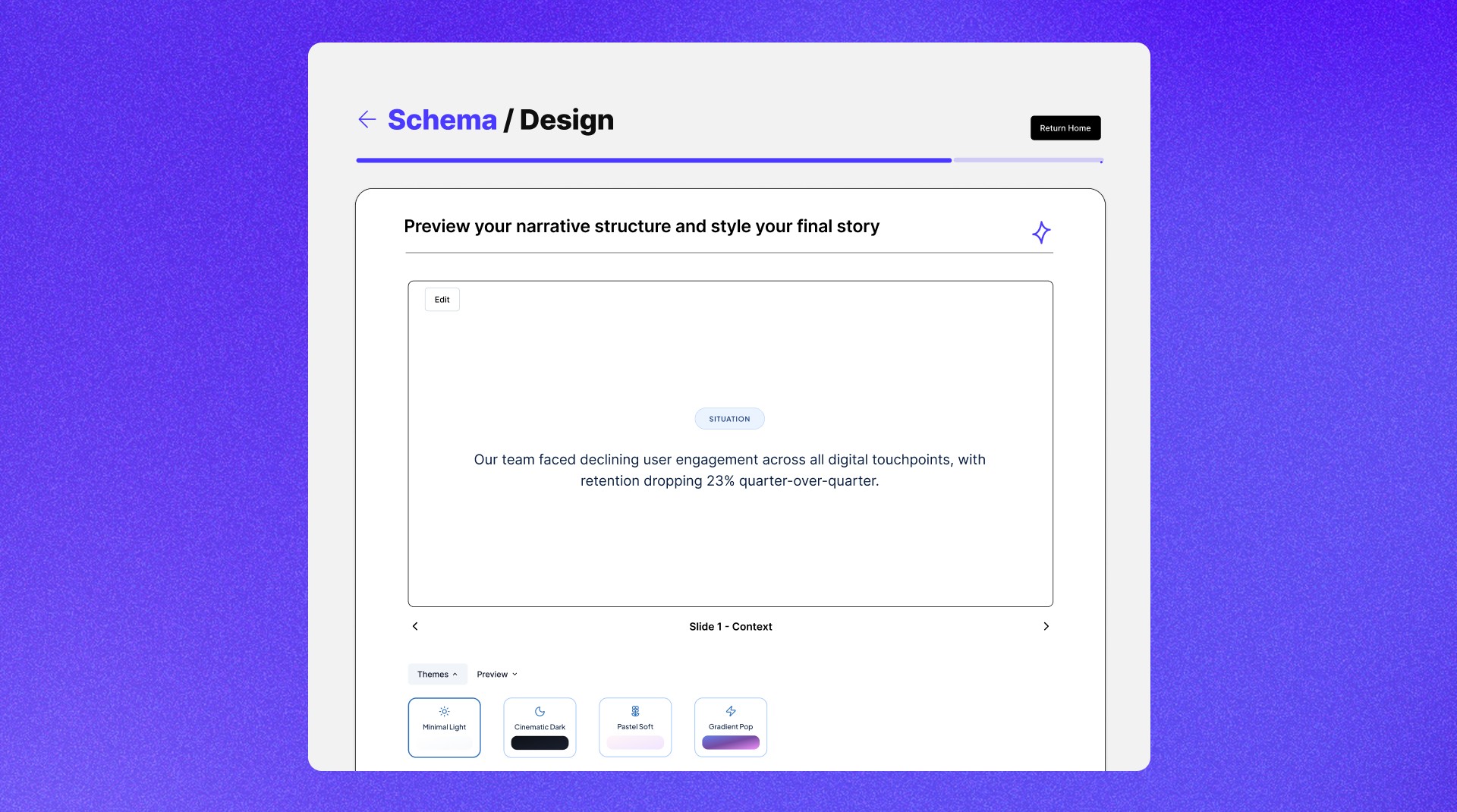
05
System generates a narrative structured presentation
Structured content is transformed into a visual storytelling format, allowing users to preview how their narrative will appear before finalizing. This stage provides control over layout, themes, and presentation style, ensuring the output reflects both message and audience. Adjustments can be made in real time prior to export.
Framework Mapping
VISUAL BRANDING
A design language in the works
Lovable and Figma Make spaces
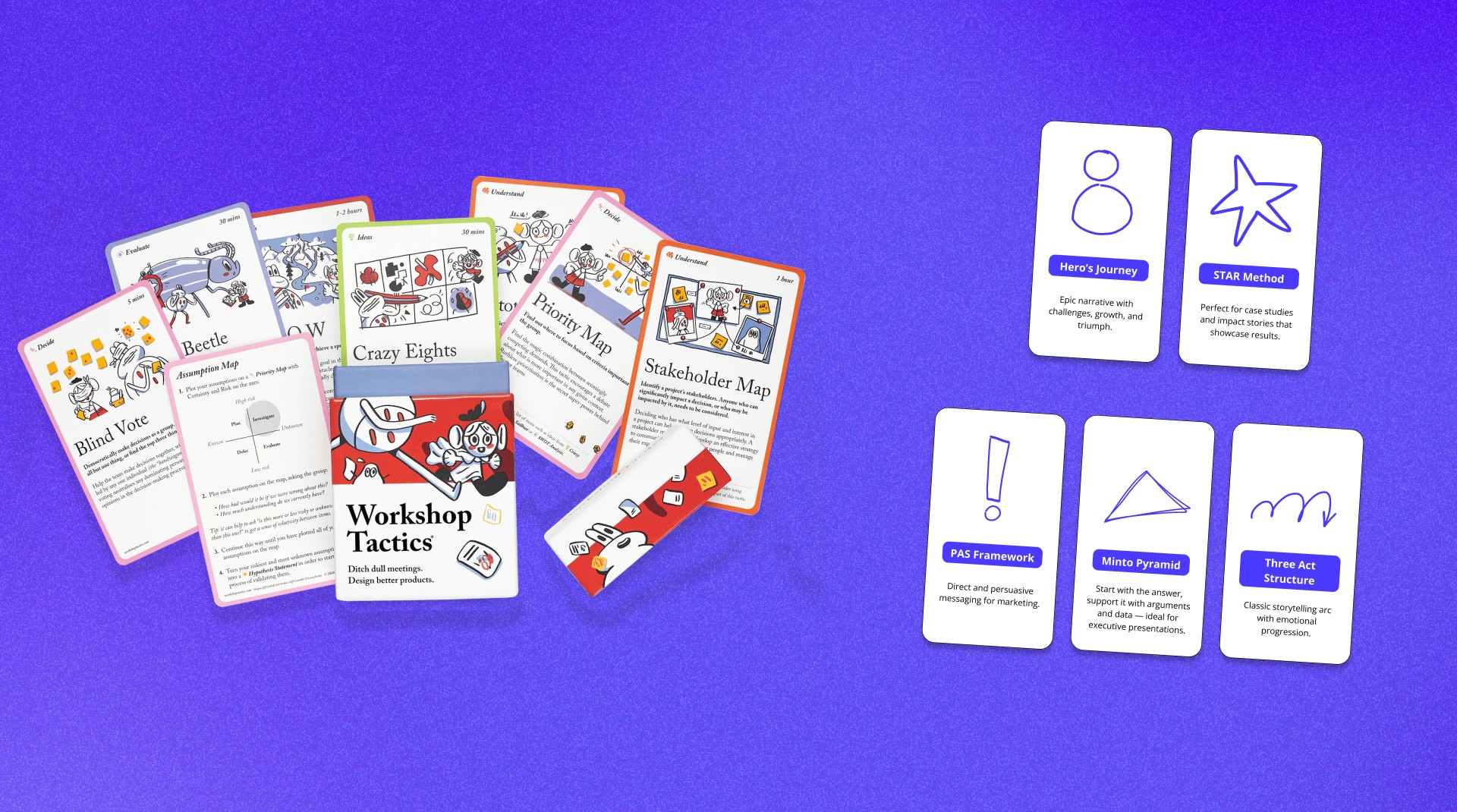
Drawing inspiration from
Pip Decks®
Schema's visual direction was inspired by Pip Decks®: card-based tool-kits used by business experts. Pip Decks® don't overwhelm users with theory, but break storytelling into clear units that feel usable and inviting.
Rather than positioning storytelling as abstract, I leaned into framework-as-object metaphors; distinct cards, icons, and simple visual cues.
Schema is a brand where storytelling works best when structure is visible, and easy to work with.
Framework Mapping